A Slugblasting review of Slime, Warp and Solder
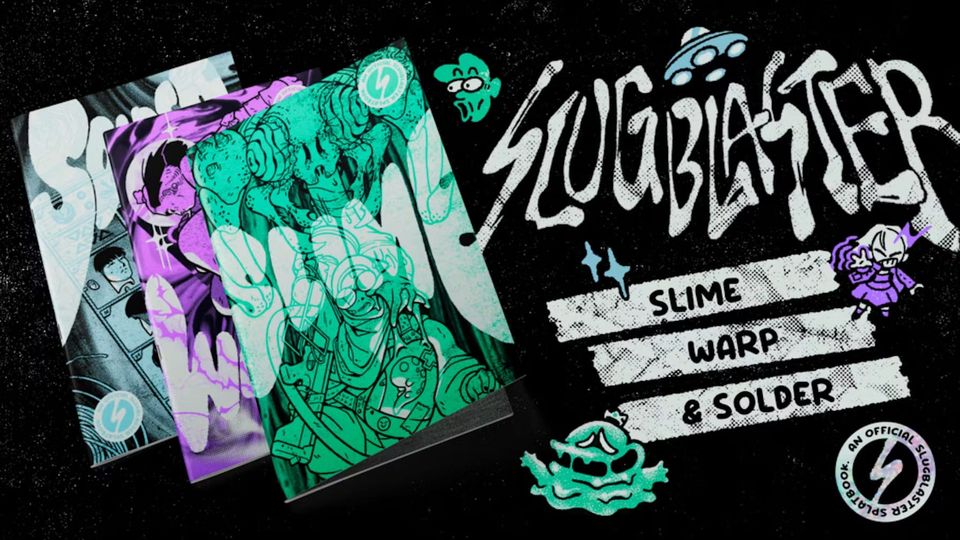
This is a submission to the Knowledge Knight's Review Jam by the Quinns Quest community on Discord, accessible by joining Quinns Quest's Patreon.
Slugblaster, it's dangerous, it's stupid and it’s also a terrific game.
In April 2026 I started a campaign of Slugblaster, online, armed with the book and its three brand new zines, SLIME, WARP and SOLDER. The premise of the game is that you play bored teenagers from the most boring city (Hilllview) in the most boring dimension (Null) in a psychedelic and weird multiverse where rock metal goth vampires live right next to the peaceful unicorns from the most perfect picnic and meditation spot you could find.
Those same teenagers, represented by playbooks that cover different archetypes (the Smart, Guts, Heart etc) are completed by a Signature, a piece of technology and gadget they probably built themselves so they can compete for the title of coolest slugblasting (skateboarding but with hoverboard in those very same weird dimensions) crew of the multiverse.
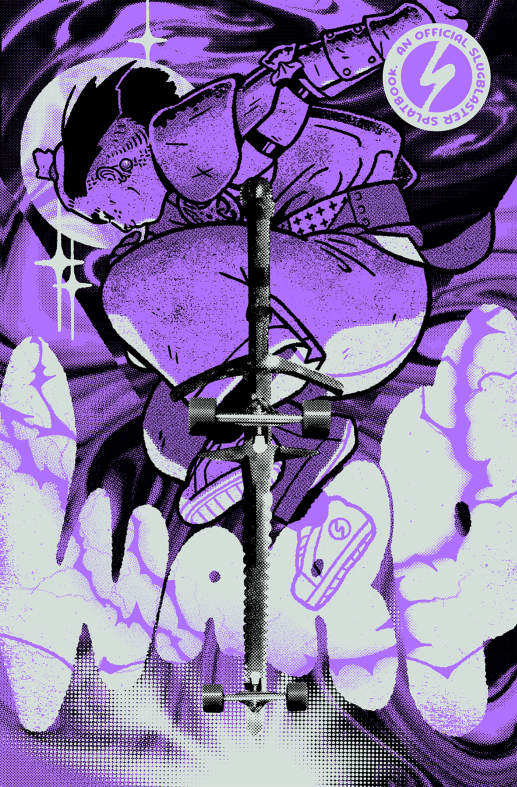
SLIME, WARP and SOLDER bring new character options, ranging from new narrative arcs for those playbooks, to new Signatures, with a touch of new consumables and gadgets to find during a run.
One of my players took a Hyperline BMX that blinks through time and space, and another built their own gadget, an electric yo-yo that cuts matter, by smashing together a base Signature (the negafriction sword) and the SLUGball from SOLDER.
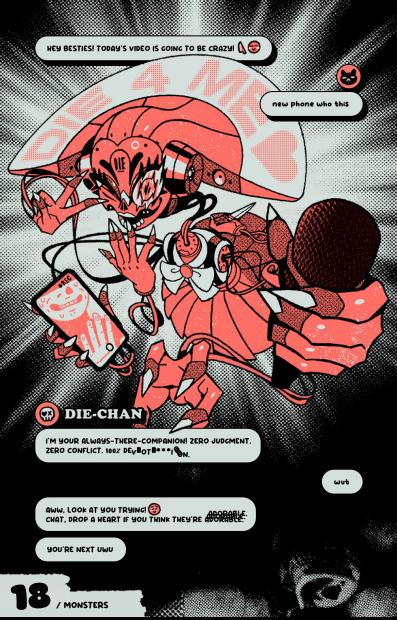
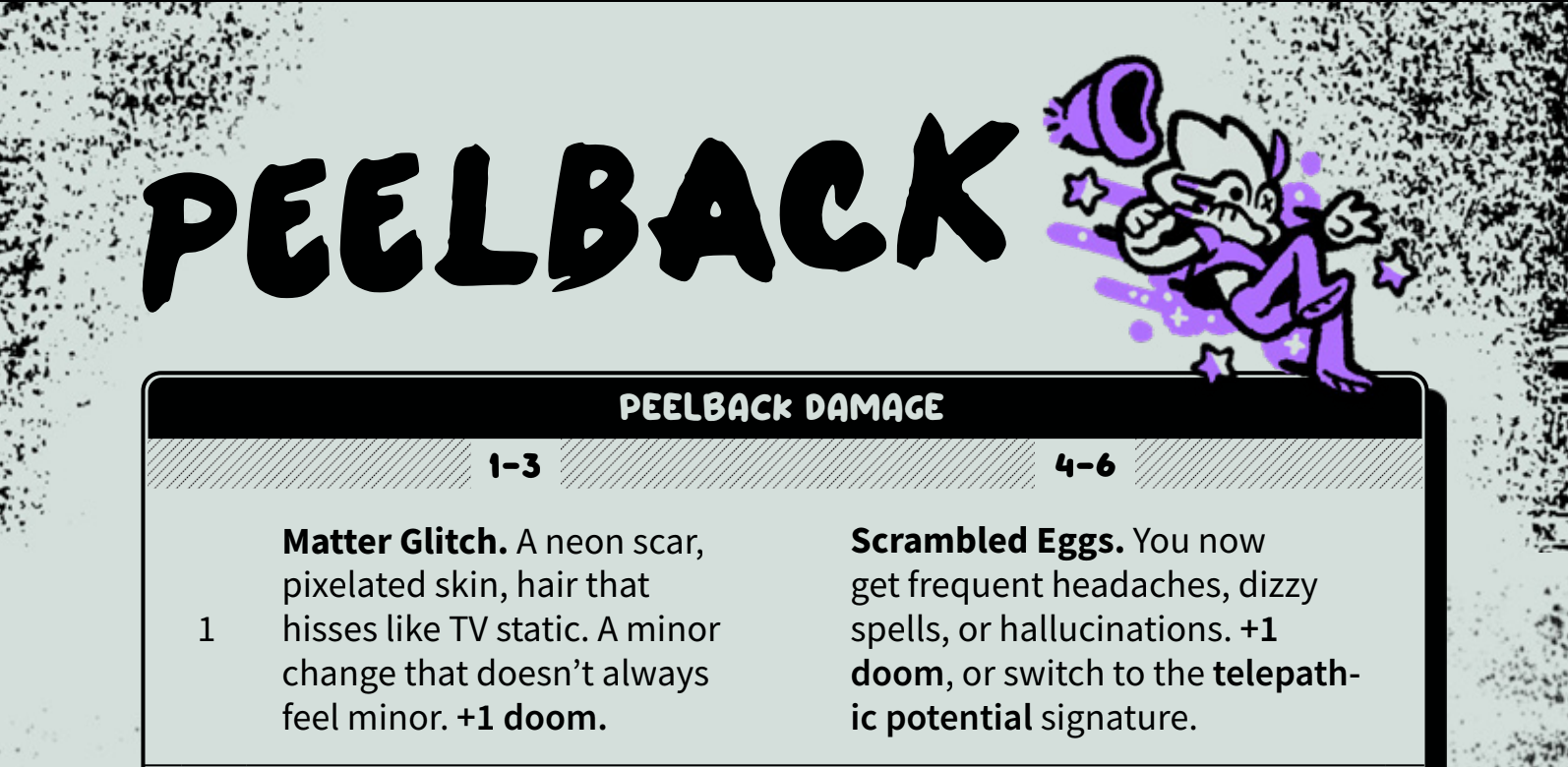
So players get shiny new toys, and the GM gets showered with new monsters and obstacles (a big <3 on DIE-CHAN, a robot influencer that steals the focus from the crew and turns its fans into psychologic and energy weapons), new rules and tables to roll on for more chaos and drama (if a character gets into too much trouble and peelback to their native dimension, you now get random tables to change either the character or the campaign profoundly, it's great).
You can use SLIME to get into the more biological, alien and sometimes gross clichés of teen movies, SOLDER to push on the sci-fi side of the multiverse, but also WARP if you're more into the supernatural and weirder vibes à la Stranger Things or Dark.
Your player characters could very much get showered by electromagnetic and radioactive SLIME that force them to go through decontamination, open loot boxes and salvage rival crews’ gears in SOLDER, or get Revelations where they meet their past and future selves to chat a bit, get changed into molecules that witness the birth and heat death of the universe, or maybe chill a bit with God, your choice, in WARP.
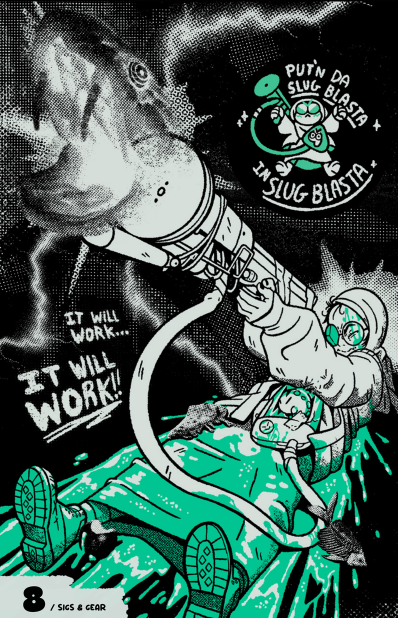
All that is presented in a very clean layout, accompanied by a great art style and direction, with fun drawings of options, gadgets and monsters that really continue the Slugblaster fresh vibes you probably have seen (or you should go search the game on the Internets now). Even the more biological and goo-esque SLIME has the perfect balance for you not to go "urgh gross" (not all the time anyway, and always with glee when you do) while reading.
But more than anything, what I think I used the most during my campaign were the runs from the zines.
If you've never played Slugblaster, a run is (supposedly) the meat of the game, where the crews gets out in the multiverse trying to impress factions, sponsors, fans and beat other crews, ideally getting resources to upgrade their Signature, while accumulating Style (the good narrative XP) and Trouble (the oups something bad happened XP).
At the end of the run, during Downtime (and I’ve found that my players loved that part almost more than the actual runs), they go back home and they then spend Style and Trouble to start narrative arcs at home and school. This is such a good mechanic in the game that it would deserve its own review.
One of the runs from SOLDER is to heist a multiversal train; the crew decided to go the other direction by stopping the heist, and then returning the train. During Downtime, one of my player characters went nuclear with his family (bad narrative xp!) and used his good narrative xp to get an internship to become a train driver. He then lived as a multiverse runaway for the latter half of the campaign, sleeping and living in train stations. The players have total control over those scenes and arcs, so this was something the player decided themselves.
They also don't have to finish the narrative arcs they started, so that very same character actually forgave only his sister, not his parents, and during the epilogue told us how he still lived far from home, in another dimension.
And SLIME, WARP and SOLDER come to the game master full of super cool and fun ideas for runs (even with two opportunities for guest players!). They each have their setup and premise, some twists, obstacles and problems for the players to face, and then an ending point with ideas for rewards and consequences.
Some of those runs even come with new rules suggestions, and you can easily reskin, dissect and mix any of those "scenarios" to fit in your campaign.
Our final run was basically a run from WARP that I barely modified to go from riding a psychic reality changing dragon to a security system for the criminal faction's main base, located in a lost glitch dimension, where one character got detained after they discovered their crush had been replaced by a killer robot (from SOLDER!).
And the best thing is that it worked so well and led us to explore the psyche of our characters and their families. We even talked about the future and what dreams would they have to give up when growing up, what would they settle for, or maybe what great goal would they achieve, if they could. And it was heavy, it was fun and it was so interesting.
Slugblaster is an amazing game, it gives so many tools for a game master, and you can run it with so little prep. For me the zines just complete the base game and make it even easier to accommodate players that might have trouble pushing the game forward themselves, something which happened at my table, and which the expansion fully fixed.
And with the right players, the zines just expand the universe and give more tools to lean into the whole teenage drama and the weird 90's x sci-fi tropes, even when you don’t know them that much.
If, like myself, you were on the fence about Slugblaster because you lacked the cultural touchstones for such a game, SLIME, WARP and SOLDER in your slugmaster arsenal will give you all the tools you need for a great campaign in the multiverse.

Comments ()